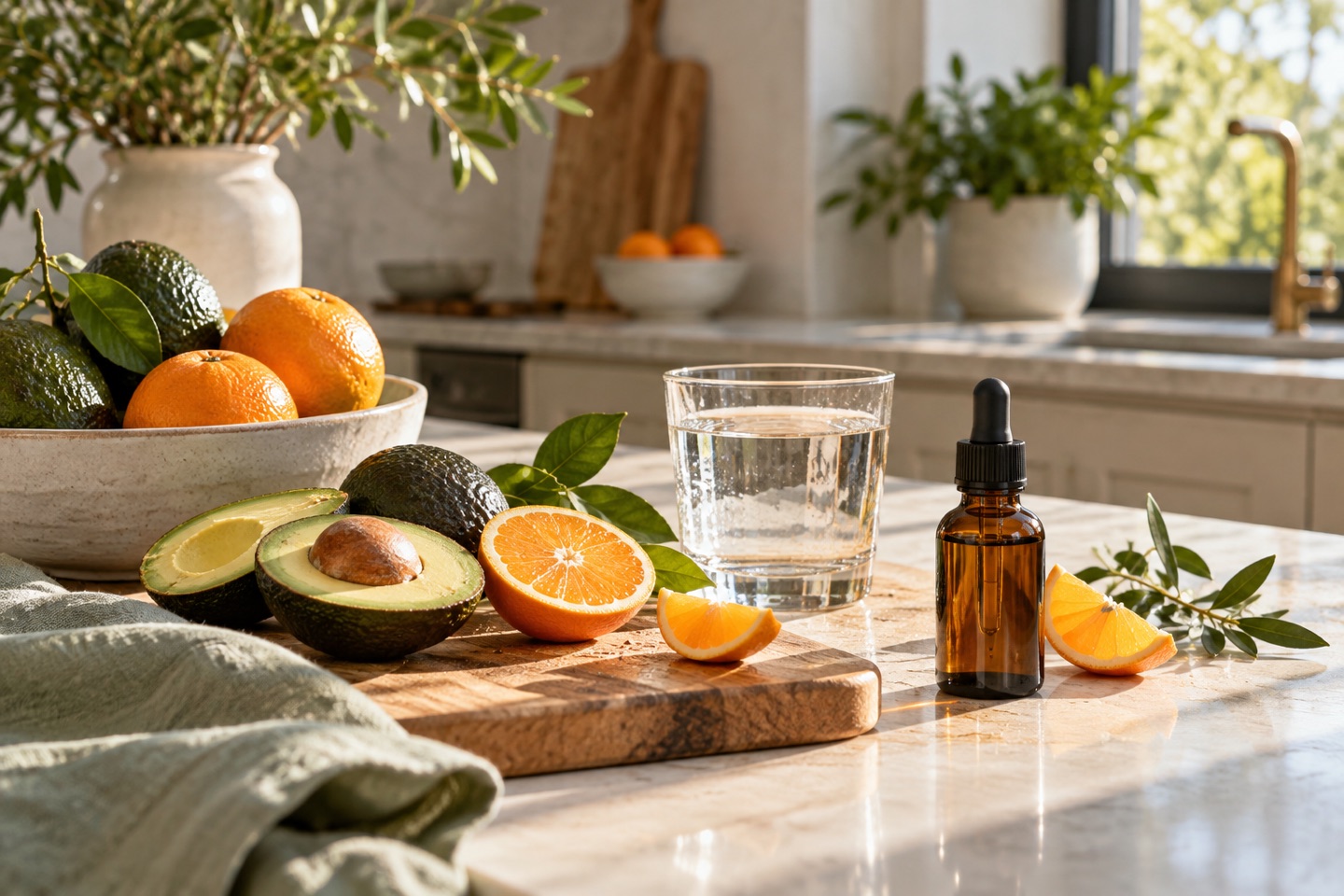
Picture a bright kitchen before the day gets noisy. A sliced avocado. Citrus on a board. A glass of water catching the light.
It is an appealing image because nourishment feels tangible. Unlike a molecular diagram, you can put it on a plate. The challenge is keeping that appeal separate from promises a meal cannot make.
Radiance is a subjective description, not a clinical endpoint. Hair growth and skin conditions have many influences. A thoughtful menu can support nutritional adequacy without pretending to control them all.
This guide uses seven anchors. The first places the advanced-product conversation where it belongs. The remaining six make the everyday foundation easier to build.
The foundational advanced bio-hack
1. Put the advanced option in its proper place
Premium Hydrolyzed Collagen Peptides paired with Topical Retinoids is an optional skin-care addition, not the nutritional foundation of this menu.
Evaluate collagen for the specific skin outcomes studied and the limits of those trials. A retinoid is a separate topical choice with its own tolerability considerations. Neither replaces a varied diet, and the pairing does not establish increased hair density.
If you choose a collagen product, check its ingredient source against your allergies. Introduce skin-care actives deliberately rather than changing everything at once. Avoid retinoids during pregnancy. The AAD supplement guidance offers a useful starting checklist.
2. Give breakfast a structure, not a beauty slogan
Choose a protein source, a plant food, and something satisfying enough to carry you into the day. Yogurt with oats, fruit, and seeds is one option. Tofu or eggs with vegetables and toast is another.
The point is adequacy and variety. A breakfast that photographs well but leaves you hungry is not necessarily a good routine.
Menu idea: a bowl with plain yogurt or a suitable alternative, berries, oats, and a small portion of seeds. Adapt it to allergies and preferences rather than treating one combination as essential.
3. Put zinc-rich foods into the rotation
Zinc contributes to normal biological functions, and deficiency can matter. Foods such as seafood, meat, legumes, and seeds can help diversify intake.
Build a lunch that makes those foods convenient. A bean-and-grain bowl with pumpkin seeds, vegetables, and a flavorful dressing is easy to vary across the week.
Do not translate the presence of zinc into a guaranteed hair-density result. More of a mineral is not always better. If you suspect deficiency or have persistent symptoms, assessment is more informative than guesswork.
4. Use vitamin E foods to make the plate richer
Nuts, seeds, and certain plant oils provide vitamin E. Avocado contributes fats and texture that can help a meal feel complete.
Think in portions and combinations rather than isolated targets. An avocado alongside beans, greens, and grains has a different role from a supplement marketed around one nutrient.
Menu idea: a satisfying salad with a substantial protein component, avocado, crunchy vegetables, and a dressing you enjoy. A “beauty salad” should still be a meal.
5. Make citrus a habit, not a treatment
An orange after lunch is a simple way to include fruit and vitamin C. Peppers, kiwi, berries, and other produce offer alternatives.
Vitamin C participates in normal collagen formation. It does not follow that a citrus ritual visibly remodels skin. Nutritional function and a cosmetic outcome are different claims.
Keep variety across the week. You do not need the same food every day to maintain a consistent pattern.
6. Approach the gut-skin axis with curiosity
The phrase gut-skin axis describes an area of scientific interest involving relationships between digestive biology and skin. It is often stretched into a promise that one probiotic or fermented food will solve a skin concern.
That leap requires evidence specific to the condition, intervention, and population. A broad concept cannot validate every product attached to it.
For ordinary menu planning:
- Include a range of plant foods you tolerate.
- Increase dietary variety at a comfortable pace.
- Avoid unnecessary food exclusions based on a social-media diagnosis.
- Seek individual advice for persistent digestive or skin symptoms.
Fermented foods can fit if you enjoy them. They are not a universal prescription.
7. Treat hydration as a practical routine
Keep water accessible. Drink in a way that fits your activity and circumstances, following any medical advice about fluid intake. A glass on the kitchen counter can be a useful reminder.
“Cellular hydration” sounds more sophisticated than thirst. It does not establish that a special drink changes skin structure. Excess water is not a substitute for a moisturizer, adequate nutrition, or treatment of a skin condition.
A workable evening meal might combine a protein source, cooked vegetables, and a satisfying starch. A workable evening routine might include gentle skin care and time to wind down.
The menu is a foundation you can live with
Use this guide as a flexible pattern. Swap ingredients. Keep the foods you enjoy. Review supplements separately from meals, and keep experimental compounds out of the nutritional-staple category.
A premium routine does not require maximal complexity. It needs enough nourishment, realistic expectations, and habits that still work on an ordinary Tuesday.