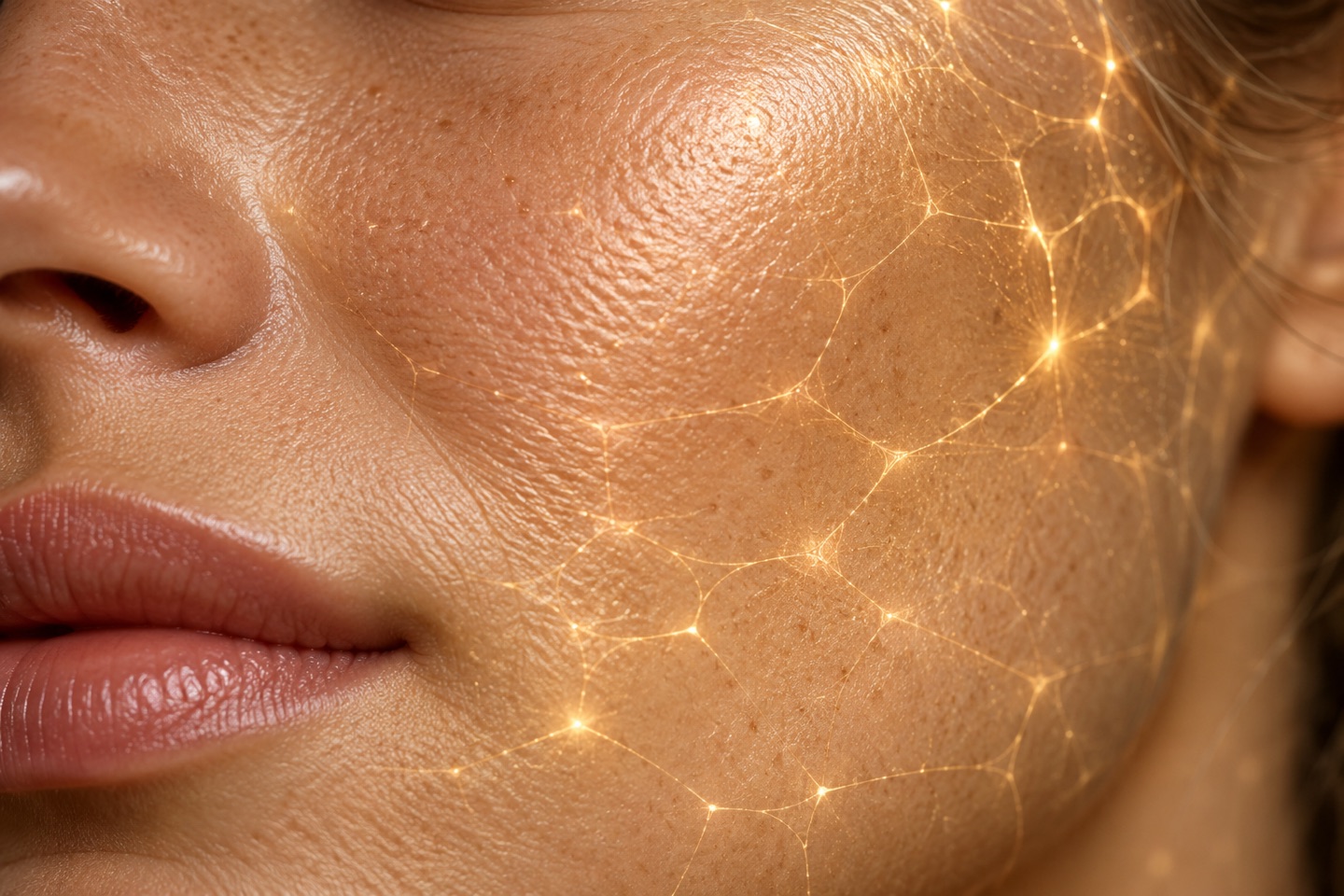
The Characters/Images used here is made with AI
An ingredient can move from a research paper to a bathroom shelf remarkably quickly. GHK-Cu has made that journey with a memorable name, an association with copper, and a steady stream of claims about smoother, firmer-looking skin.
The interesting story starts before the product claims. Understanding the molecule, the experiments, and the finished formula makes it easier to see why copper peptides attract attention—and where a good explanation should stop.
1. Decode the name before the promise
GHK refers to glycine, histidine, and lysine: three amino acids joined in a particular sequence. Cu is the chemical symbol for copper. Together, GHK-Cu describes a copper-binding peptide complex.
That name tells you something about chemistry. It does not tell you how well a serum works. Two products can feature the same named ingredient while differing in their other ingredients, packaging, and the evidence available for the finished formula.
2. Understand why collagen enters the conversation
One foundational study examined GHK-Cu in fibroblast cultures and found stimulation of collagen synthesis. Fibroblasts are relevant to skin research because they help produce components of connective tissue.
This is a useful explanation of scientific interest, with a clear boundary: the experiment investigated cells under controlled conditions. It did not establish the result someone should expect from applying an arbitrary commercial serum. Laboratory activity is a starting point for testing a cosmetic claim.
3. Separate an ingredient study from a product study
Imagine a headline saying that a peptide influenced collagen in a laboratory experiment. Now imagine a second headline saying that a particular cream improved the appearance of fine lines in a controlled human study. These statements answer different questions.
When reading an article, look for the bridge between them. Was the actual finished product tested? Was there a comparison group? Were changes measured consistently? Without those details, “science-backed ingredient” can carry more weight than the underlying evidence supports.
4. Give the whole formula a place in the story
A serum is a combination of ingredients. If skin feels softer after application, that observation alone cannot show which ingredient produced the change. The texture, the moisturizing components, and the rest of the routine are all part of what someone experiences.
A thoughtful product description explains the role of the formula rather than assigning every possible improvement to its most marketable ingredient. A thoughtful reader can enjoy a product while keeping that distinction in mind.
5. Keep topical and injectable claims separate
A cosmetic applied to the skin and a compound administered by injection should never be treated as interchangeable. Evidence about one route does not automatically establish the effects or safety of another.
For injectable GHK-Cu, the FDA has noted limited human safety data and potential immune-reaction concerns. A skin-care article therefore needs to be precise about the preparation it discusses. The familiar name on a cosmetic label does not validate a different route of use.
6. Watch for promises that outrun the experiment
Words such as “regeneration,” “reversal,” and “rebuilding” can describe research interests, marketing language, or very different clinical outcomes. The surrounding details tell you which meaning is intended.
A claim that a peptide changes a cellular measurement needs a different kind of proof from a claim that it visibly improves skin or treats a medical condition. When those steps are compressed into one sentence, pause and ask what was actually observed.
7. Make room for a calm, readable routine
If you are comparing cosmetic products, begin with a practical question: what do you want this product to add to your routine? Read its directions, ingredient list, and any description of testing before deciding whether it fits.
Keep a simple record of the products you use and when you change them. Similar lighting can make personal photographs easier to compare, although they are not a controlled experiment. Persistent irritation or a new skin concern deserves qualified assessment rather than a succession of new products.
GHK-Cu is an interesting ingredient with a genuine laboratory research history. The useful next question is what evidence supports the specific product and claim in front of you. Clear expectations make a skin-care routine easier to understand.
For general education. Cosmetic ingredient research is not a diagnosis or evidence that a product treats disease. Seek qualified advice for persistent skin changes.