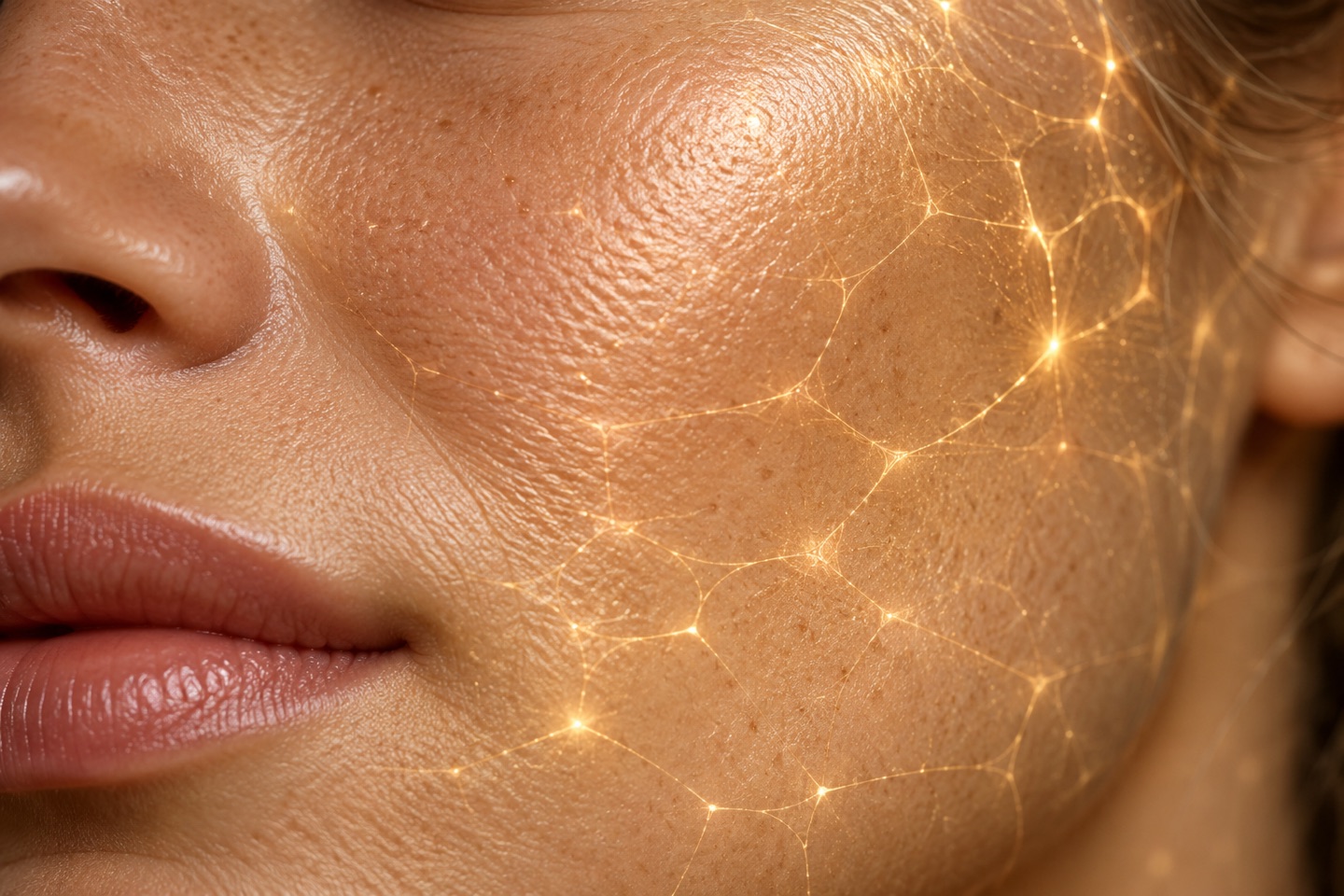
The Characters/Images used here is made with AI
A good beauty discovery makes you curious enough to turn the bottle around and read the label. Peptides have that effect: compact scientific names, elegant serum textures, and a place in the conversation about softer-looking lines and skin that feels well cared for.
The appeal makes sense, but “peptide” is a family description, not a finished beauty result. Here is how to understand the ingredients, recognize useful evidence, and give a peptide product a sensible place in your routine.
1. Tiny chains, different beauty stories
Peptides are short chains of amino acids. Different sequences produce different molecules, which is why an ingredient list may contain several names that share the word “peptide” but refer to different substances.
For a beauty reader, the practical lesson is to be specific. A study about one named peptide does not validate every peptide serum. Begin with the actual ingredient and the claim being made: appearance of fine lines, skin texture, or something else entirely.
2. Look for evidence beyond the ingredient trend
A 12-week, randomized, split-face study in 93 women compared a moisturizer containing palmitoyl pentapeptide with the same moisturizer without it. The peptide formula performed better on measured fine-line and wrinkle outcomes.
That is more informative than simply saying an ingredient is popular. It is still evidence for a specific formula and study population, rather than a guarantee for every bottle. Details such as the comparison product and the way results were assessed make a beauty claim easier to interpret.
3. Copper peptides add another layer of interest
GHK-Cu is one of the best-known names in this discussion. It combines a three-amino-acid peptide with copper, and laboratory research has investigated effects on collagen synthesis in cultured fibroblasts.
The connection to skin structure explains the curiosity around it. It does not turn a cosmetic into a treatment that reverses aging. When reading a copper-peptide claim, keep the laboratory finding separate from evidence about the finished product on real skin.
4. A fresh-looking finish can have more than one explanation
Moisturizing ingredients can make skin look smoother by increasing hydration and temporarily softening the appearance of fine lines. A peptide serum or cream may contain these ingredients alongside its featured peptide.
That means an immediately softer feel is not proof that the peptide has changed deeper skin structure. Enjoy the texture and comfort, while keeping the explanation accurate. A product can be pleasant to use without every visible effect belonging to the ingredient highlighted on the front.
5. Choose the formula you will actually enjoy using
Start with your skin type, the product’s intended purpose, and the manufacturer’s directions. A light serum and a richer cream can fit different preferences. There is no need to assume that the more elaborate name or the higher price automatically brings a better result.
Look for a clear ingredient list and an explanation of any testing on the finished formula. An ingredient’s position in the list, by itself, cannot tell you how effective the product will be. Favor a product description that explains what was tested over one that promises everything.
6. Build the routine around a few reliable steps
A peptide product can sit within a straightforward routine: gentle cleansing, moisturizer suited to your skin, and daytime sun protection. The American Academy of Dermatology recommends sunscreen and moisturizer as the starting points for an anti-aging routine.
Introduce one new product at a time, follow its directions, and test it on a small area before wider use. Compatibility advice should relate to the actual formulas you use. A blanket rule about all peptides and all other actives is less helpful than specific product guidance.
7. Give the glow-up a realistic timeline
A first application can tell you about slip, finish, and comfort. It cannot tell you whether a product will deliver a lasting change in skin appearance. Use the testing period and outcomes described for that particular formula as context, rather than borrowing another product’s promise.
Keep occasional photographs in similar lighting and note what else changed in the routine. Stop a cosmetic that causes a reaction, and seek qualified advice for persistent irritation. The best routine is one you can follow comfortably, with expectations that match the evidence.
The most appealing peptide glow-up is a well-informed one: a formula that fits your skin, a clear reason for using it, and a beauty claim supported by relevant testing. Let the science add clarity to the ritual.
For general education. Cosmetic ingredients do not replace diagnosis or treatment of a skin condition. The AI-created person shown is an editorial illustration, not a customer testimonial or a demonstration of product results.