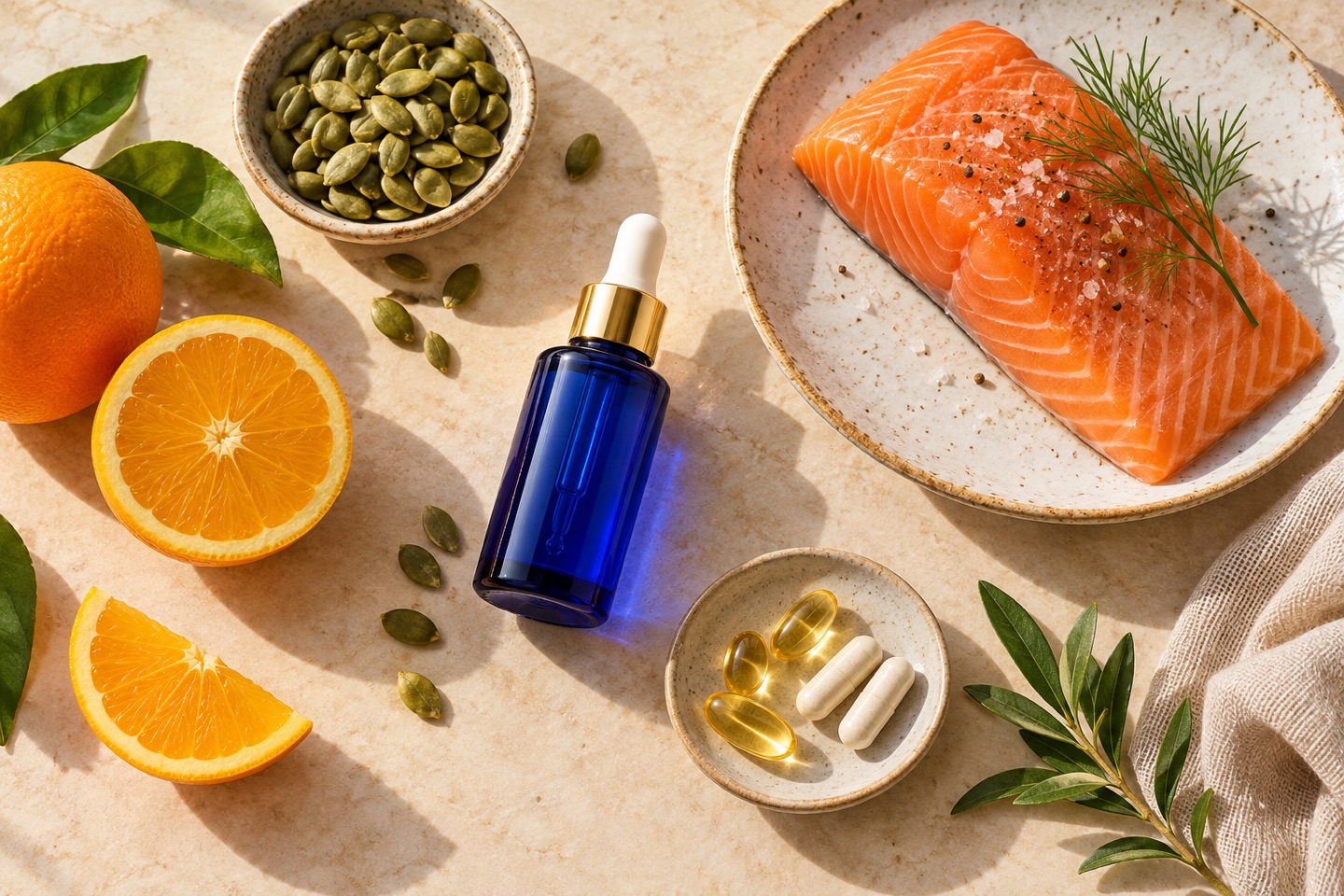
Your bathroom shelf tells only half the story. The other half sits on your plate, in your sleep schedule, and in the habits you repeat when nobody is watching.
Skin and hair are living tissues. They need adequate nutrition. They also respond to ultraviolet exposure, irritation, genetics, and health conditions. No single food, capsule, or serum controls the whole picture.
The most useful routine is repeatable, measurable, and proportionate. These ten priorities give you a place to start. The first includes two reading perspectives so you can distinguish emerging research from everyday care.
Point 01 / Start with the evidence
1. Choose a primary strategy you can actually evaluate
Premium Hydrolyzed Collagen Peptides paired with Topical Retinoids brings together an optional dietary supplement and a skin-care ingredient with clinical evidence. They have different jobs and should be evaluated separately.
Some collagen trials report improvements in skin hydration or elasticity. Findings are inconsistent, and “premium” describes positioning rather than proof. Retinoids have a stronger established role in treating photoaged skin, but can irritate it. Introduce products cautiously, use sun protection, and avoid retinoids during pregnancy.
Neither part of this pairing establishes a reliable increase in hair density. Sudden shedding deserves an assessment rather than another beauty powder.
Choose products with clear ingredient information and realistic claims. Read the collagen evidence review and the AAD retinoid guide before treating a purchase as a breakthrough.
2. Build a meal around complete nutrition
Think of a plate rather than a miracle ingredient. A salmon dinner with vegetables and a satisfying carbohydrate source offers a more useful foundation than a scattered handful of beauty pills.
Wild salmon can supply protein and fatty acids. It is one option, not a requirement. Eggs, dairy, tofu, beans, and other foods can fit a nourishing pattern. Your choices should work with your preferences, allergies, and budget.
Consistency beats culinary perfection. Plan a few reliable meals that you genuinely enjoy.
3. Put vitamin C on the plate
Vitamin C supports normal collagen formation. Citrus, peppers, berries, and broccoli can all contribute. Pairing different plant foods makes a routine more interesting and more nutritionally varied.
That does not mean an extra-large dose produces extra-large results. A bowl of fruit is food; a high-dose supplement is a separate decision.
4. Use pumpkin seeds as a useful supporting player
Pumpkin seeds add texture, fats, and minerals such as zinc. Scatter them over a grain bowl or yogurt. Combine them with other protein foods rather than expecting a garnish to meet every need.
Zinc matters, but taking more is not automatically helpful. Correcting a deficiency and supplementing without one are different situations.
5. Treat biotin as a nutrient, not a hair-growth promise
Biotin participates in normal metabolism. That fact does not establish that a biotin gummy thickens healthy hair. Investigate shedding before assuming a missing vitamin.
Biotin supplements can also interfere with certain laboratory tests. Tell your clinician what you take. The AAD supplement guide explains why a food-first approach often makes sense.
6. Make vitamin D3 a targeted decision
Vitamin D status depends on several factors. If you have risk factors for deficiency, discuss whether assessment or supplementation is appropriate. Do not use hair appearance to diagnose your vitamin D level.
A targeted plan is more useful than adding another bottle because its label mentions beauty.
7. Protect skin from the outside
A routine that ignores ultraviolet exposure leaves an obvious gap. Make shade, protective clothing, and appropriate sunscreen part of ordinary days, including days without a beach trip.
Choose a moisturizer that feels comfortable. A supported skin barrier is a practical goal even when you are interested in advanced cellular science.
8. Give the scalp its own attention
Skin care does not stop at the forehead. Wash according to your scalp’s needs, avoid hairstyles that repeatedly pull at roots, and reduce avoidable heat damage.
Persistent itching, scaling, patches of hair loss, or a sudden change in shedding merit professional attention. A food diary cannot identify every scalp condition.
9. Create a rhythm you can sustain
Keep meals regular enough to support adequate intake. Build a bedtime routine. Choose movement that fits your energy and recovery needs.
These habits are not a promise of thicker hair by next month. They are the infrastructure that makes your daily care easier to sustain.
10. Measure changes without chasing them
Take occasional photographs in comparable lighting. Note when you introduce a new product. Resist changing five things every week: that makes both benefit and irritation harder to interpret.
- Track comfort and tolerability first.
- Give routine changes enough time to assess.
- Seek advice when symptoms persist or worsen.
The best inside-out routine ends with fewer guesses. Feed yourself well. Protect your skin. Let evidence determine which extras deserve space on the shelf.